How to Layer Warm Lighting in Every Room
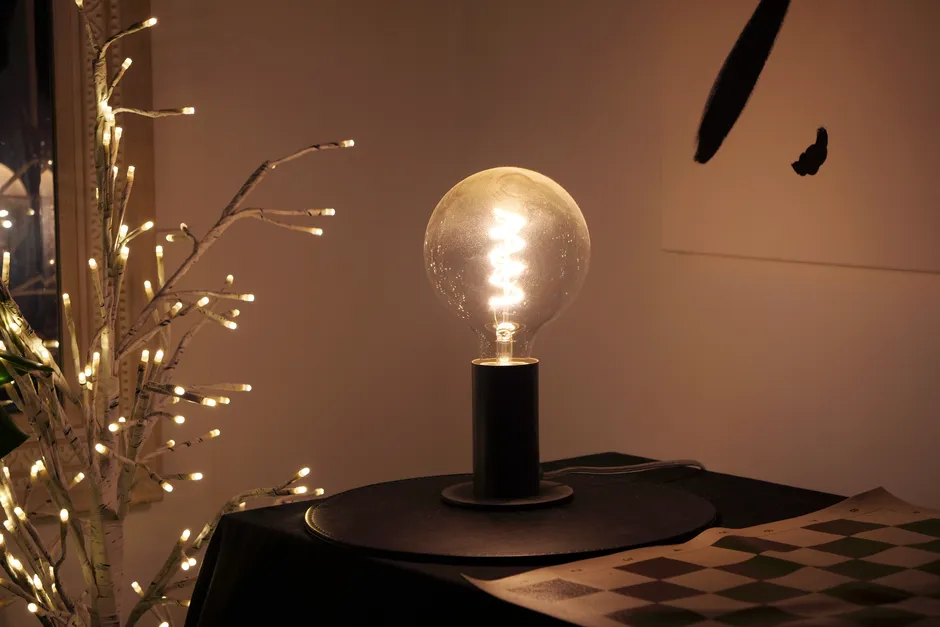
- Layer a room by giving each light one job
- Map the room before buying another lamp
- Build the layers in this order
- How to layer a living room
- How to layer a bedroom
- How to layer a kitchen and dining area
- How to layer a hall or entry
- Coordinate color temperature, lumens, and rendering
- Use dimming as control, not camouflage
- A no-renovation layering plan
- Fix the room by symptom
- The final night-time check
- Sources
Layer a room by giving each light one job
To layer lighting in a room, start with ambient light for general visibility, add task light where hands and eyes do focused work, then add accent light to give a wall, object, or texture emphasis. Put the layers on separate controls when possible. Choose bulb brightness in lumens, coordinate color temperature rather than demanding one Kelvin value everywhere, and judge every layer at night from the seats and worktops you actually use.
The useful question is not "How many lamps does this room need?" It is "What must this room let me do, and which surface should each light reach?" A handsome pendant can be ambient light, task light, or mostly decoration depending on its height, shade, beam, and output.
| Layer | Its job | Common sources | The failure it prevents |
|---|---|---|---|
| Ambient | Makes the room navigable and gives it a base level of light | Ceiling fixture, indirect floor lamp, wall wash, several shaded lamps | Dark gaps and harsh islands |
| Task | Puts usable light on a specific activity | Reading lamp, desk lamp, under-cabinet strip, vanity light | Shadows where you read, chop, write, or dress |
| Accent | Directs attention and gives the room depth | Picture light, narrow-beam spot, shelf light, small uplight | A flat room in which every surface has equal importance |
The Illuminating Engineering Society describes ambient light as general illumination, task light as light for activities such as reading and writing, and accent light as a way to highlight objects, details, and form. It also notes that ambient light used alone can flatten visual hierarchy. That distinction is a better starting point than buying three fashionable fixtures and hoping they become a system.
Map the room before buying another lamp
Do one evening audit with every existing light on. Stand in the doorway, then sit or work in each normal position. Write down three things:
- Activities: reading, serving food, cooking, dressing, finding keys, watching television, cleaning.
- Useful surfaces: book page, desk, counter, mirror, floor path, dining table.
- Features worth emphasizing: textured plaster, art, timber grain, books, plants, a curtain fold.
Now assign a layer to each need. Reading on a sofa is a task problem. A dim corner that makes the route through the room uncertain is an ambient problem. A beautiful stone wall that disappears after sunset is an accent problem.
This audit also stops a common mistake: trying to repair every weakness with a brighter central fitting. More overhead output may make the center brighter while leaving a reader's own head casting a shadow on the page. The answer there is a task lamp placed beside the seat, not a more forceful ceiling.
Take photographs from the doorway and principal seat with one layer switched off at a time. You are not judging camera quality. You are checking whether each group makes a visible, useful difference. If removing a lamp changes nothing, it may be decorative clutter rather than a working layer.
Build the layers in this order
1. Set a calm ambient base
Ambient light should make the room legible without forcing every corner to the same brightness. A ceiling fitting can do this, but it does not have to work alone. Light bounced onto a ceiling or pale wall often feels softer because a broad surface becomes the apparent source.
In a living room, ambient light might come from a shaded pendant plus a floor lamp aimed upward. In a bedroom, it might be a modest ceiling light supported by two shaded bedside lamps. In a hall, a ceiling or wall fitting should make the full walking route clear.
Avoid hiding practical hazards in mood. Steps, thresholds, and circulation routes need clear visibility. Accent lighting does not substitute for adequate general light on a route.
2. Put task light between the user and the work
Task light should reach the surface without the user's head or hands blocking it. Sit in the chair before choosing the lamp side. Stand at the kitchen counter and notice which shoulder faces the available light. At a desk, check the page and keyboard, not the wall behind them.
A movable arm, adjustable head, or broad shade is useful because it lets the user tune the beam. Keep the bright bulb itself out of the normal sightline. The shade should reveal the work and conceal glare; those two jobs matter more than whether its finish matches a nearby handle.
3. Add accent light sparingly
Accent light works through contrast. Aim it at one or two features that deserve attention, not every object on every shelf. Grazing light across brick, timber, or woven material emphasizes texture. A picture light or directed spot can make art a focal point. A small lamp on a console can make an entry feel inhabited rather than merely passed through.
Check the reflected view before fixing a direction. A spot aimed at framed glass, a glossy television, or a mirror may send glare straight into the main seat. Shift the source, reduce the angle, or light the adjacent wall instead.
How to layer a living room
A living room usually changes job several times in one evening, so flexibility matters more than one perfect scene.
- Ambient: use a ceiling fitting, indirect floor lamp, or two shaded lamps that spread light across more than one corner.
- Task: put a reading lamp beside the seat where reading actually happens. A table lamp across the room may look balanced and still be useless to the reader.
- Accent: light one feature - art, shelving, a textured wall, or a plant - and let other objects remain quieter.
Place the three groups on separate switches or smart controls if the products and wiring allow it. A television scene may use low ambient light behind or beside the viewing area while keeping direct glare off the screen. A conversation scene can bring the shaded lamps up and leave the ceiling fitting down. Cleaning needs more general visibility than either.
Warm light also changes how materials read. Timber, brass, rust, tobacco, ochre, and cream tend to feel richer when they are not overwhelmed by a cold-looking source. The existing guide to mixing brass and wood explains how those finishes can repeat without turning into a matching set.
How to layer a bedroom
Start with enough ambient light to dress, put things away, and move around safely. Then give each side of the bed its own task light where practical. The useful bedside light is the one a person can operate from bed and aim at a book without illuminating the other pillow more than necessary.
A shaded table lamp, plug-in wall light, or adjustable reading light can perform that task. Accent light should stay low-key: a gentle wash on curtains, a small dresser lamp, or light on an artwork. A bright uncovered bulb opposite the bed tends to dominate the view even when its wattage is modest.
Do not make sleep or health promises from a decor choice. Warm bedroom lighting is an atmosphere and usability decision here, not a treatment. Choose the lighting that lets the occupants read, dress, relax, and navigate comfortably.
How to layer a kitchen and dining area
Kitchens expose the difference between ambient and task light immediately. General ceiling light helps with movement and cleaning, but cabinets and the cook's body can cast shadows over the worktop. Under-cabinet or correctly placed directional light can put the task layer on preparation surfaces.
Check three work zones separately: sink, preparation area, and cooking area. Light should reach each surface without an exposed source shining into standing eye level. Use fixtures and lamps rated for the location and follow all product clearances and installation instructions.
Keep electrical work out of the styling exercise. Hard-wired under-cabinet lighting, new ceiling points, and wall dimmers should be specified and installed by a licensed electrician. If a renter cannot alter wiring, a listed plug-in lamp or manufacturer-approved plug-in lighting system can add a separate layer without opening a wall.
Over a dining table, a pendant may act as task and accent light together: it illuminates the tabletop and creates a visual center. The surrounding room still needs a modest ambient layer so the table does not become a bright island in a black room.
How to layer a hall or entry
A hall's first layer is practical: the full route, steps, and thresholds must be visible. Wall lights or a ceiling source can supply that ambient base. Then add task light at the place where people handle keys, mail, shoes, or a bag. A small console lamp can be task and accent light if it reaches the surface and also warms the wall behind it.
Mirrors need testing. Stand where someone will actually look into the glass. If a ceiling light leaves the face in shadow, a source nearer face height may work better. If the mirror reflects a bare bulb from the opposite wall, move or shade that source. The reflection is part of the lighting plan, not an afterthought.
Coordinate color temperature, lumens, and rendering
Color temperature describes the appearance of the light and is measured in kelvin (K). The U.S. Department of Energy's current bulb-buying guidance describes 2,700 K as warm and 3,000 K as soft, while noting that a shift from 2,700 K to 4,100 K is clearly noticeable. Those values are useful anchors, not room laws.
Use the same or neighboring color temperatures within one sightline unless contrast is deliberate. A 2,700 K lamp beside a 4,100 K ceiling source can make one look amber and the other stark. In an open-plan room, start by coordinating the lights seen together, then decide whether the kitchen task layer genuinely benefits from a distinct appearance.
Choose brightness by lumens, not by using wattage as a synonym for light. DOE defines lumens as the total visible light emitted and wattage as power input. But lumen totals alone do not describe where the light lands: an opaque shade, a narrow beam, a high ceiling, and dark finishes all change the result in the room.
Color rendering index (CRI) is a 0-to-100 comparison of how a source renders colors against a reference source, according to DOE. Compare it when textiles, food, skin tones, wood, or art look oddly dull under one lamp. Treat the number as one product field, not a complete promise of beauty; distribution, glare, and color temperature still matter.
For a label-first bulb decision, use the warm light bulb guide. Check base, bulb dimensions, lumens, color temperature, dimmability, fixture rating, and whether the LED is approved for an enclosed fixture. DOE notes that enclosed fixtures trap heat and that some LEDs must be specifically approved for that use.
Use dimming as control, not camouflage
Dimming makes a layered room adaptable, but the bulb, driver, and dimmer must be compatible. ENERGY STAR advises buying bulbs marked dimmable and checking the bulb package or manufacturer's site for compatible dimmers. Incompatibility can show up as flicker, limited range, delayed start, buzzing, or failure to switch fully off.
Do not treat those symptoms as a decor quirk. A hot or discolored wall plate, unexplained flicker, crackling, popping, buzzing, repeated breaker trips, an odor, looseness, or a shock requires the lighting control to be taken out of use and assessed by a qualified electrician. The Electrical Safety Foundation International lists those as warning signs and routes switch installation to a licensed professional.
Portable plug-in dimmers are an option only when both the lamp and bulb manufacturer permit them. They do not convert a non-dimmable LED into a dimmable one.
A no-renovation layering plan
Renters and cautious first-timers can build a useful three-layer scheme without changing fixed wiring:
- Keep the existing ceiling light as the ambient base.
- Add one floor or table lamp to brighten the darkest occupied corner.
- Add a directed task lamp at the main reading, desk, or craft position.
- Use a small shaded lamp or plug-in picture light for one focal surface, following the product's mounting instructions.
- Put each portable layer on a reachable, product-approved switch or control.
Run cords where they cannot be crushed, damaged, or create a trip route. Do not route them under rugs or furniture. The U.S. Consumer Product Safety Commission advises replacing worn or damaged cords, keeping combustibles away from bulbs, and using the fixture's correct lamp type and maximum wattage. Keep those checks separate from questions of color and mood.
Fix the room by symptom
| What the room feels like | Likely cause | First test |
|---|---|---|
| Flat and washed out | Ambient light is doing every job | Switch off one overhead source and add one directed accent |
| Cozy but hard to use | Too little task light | Aim a movable lamp directly at the work surface |
| Bright yet gloomy at the edges | Light is concentrated at the ceiling center | Add a shaded or indirect source in an occupied corner |
| Glary | The bulb or a reflection sits in the normal sightline | Shade, move, or redirect the source |
| Patchwork of yellow and white | Visible sources have widely separated color temperatures | Group lights by sightline and coordinate their labels |
| Art disappears | No contrast or poor aiming | Lower surrounding light slightly and direct one controlled source |
| New LEDs flicker on a dimmer | Compatibility or electrical problem | Stop experimenting and have the product list and circuit checked by a licensed electrician |
Change one layer at a time and live with it for several evenings. If you replace the ceiling bulb, add two lamps, move the art, and repaint the wall in one weekend, you will know that the room changed but not why it improved.
The final night-time check
Walk the room in each real mode: arrival, task, conversation, screen use, cleaning, and departure. Confirm that the route is visible, the work surface is lit, the main seat is free of direct and reflected glare, and every layer can be controlled without crossing a dark room.
Then remove what is not earning its place. Layered lighting is not a fixture count. It is a set of distinct jobs, each done cleanly enough that the room can change character without losing function.
Sources
- Illuminating Engineering Society: ambient, task, and accent layers
- U.S. Department of Energy: purchasing energy-efficient light bulbs
- ENERGY STAR: DIY lighting guide
- U.S. Consumer Product Safety Commission: home lighting and cord safety
- Electrical Safety Foundation International: switch and dimmer safety