How to Choose a Table Lamp for a Warm Glow
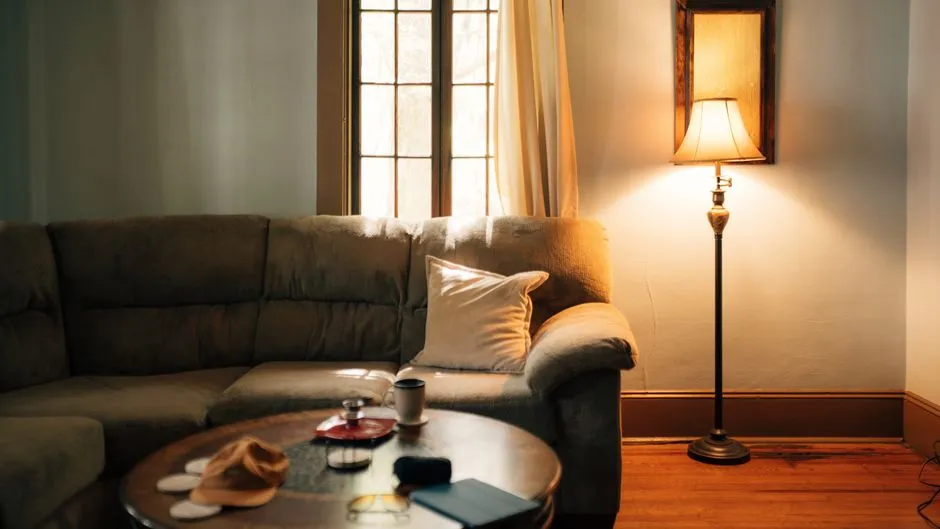
How do you choose a table lamp that works in your room?
Choose a table lamp by its job, then its fit: reading beside a chair, soft light beside a sofa, or a decorative glow on a console. Compare the complete lamp's dimensions with your furniture and seated view, examine the shade while lit, and match the bulb to the exact lamp instructions. Our first shortlist would separate adjustable task lamps, fabric-shaded lamps and low glass globes. Any fixed-wiring changes require a licensed electrician.
A lamp can look lovely in a photograph and still leave you with an awkward purchase. Perhaps its shade fills the side table, its switch sits behind the sofa, or its silhouette is lost against a busy picture wall. Decide what success would look like in your room before choosing a finish.
This is a desk-researched buying guide, based on manufacturer documentation and electrical-safety guidance. We have not tested these lamps. The examples below illustrate three different buying choices; they are not a ranking of every lamp available. Product details refer to the linked US versions.
Which kind would we shortlist first?
For a sofa-side lamp bought mainly for atmosphere, our first pick is a fabric-shaded design. For reading, start with an adjustable task lamp. For a low decorative composition, consider a glass globe. These are editorial starting points, subject to the furniture check below.
| Your main purpose | Documented example | Reason to consider it | Drawback for this brief |
|---|---|---|---|
| Diffused decorative light | IKEA ÅRSTID, nickel plated/white | Fabric shade and pull switch | A fixed silhouette offers less flexibility than an adjustable task design |
| Directed reading light | IKEA FORSÅ, nickel plated | Adjustable arm and head | Its work-lamp appearance may feel too utilitarian beside a dressed console |
| A low point of mood light | IKEA FADO, white | White glass globe | Its rounded body occupies table width even though it is low |
Fabric shade: our sofa-side starting point
ÅRSTID's manufacturer describes diffused decorative light. We would shortlist this familiar shaded form when the lamp should feel like part of a furnished sitting room. Worth knowing: a fixed shape leaves you choosing its position carefully; it does not offer the task lamp's adjustable direction.
Adjustable task lamp: our reading-first choice
FORSÅ has an adjustable arm and head. We would prioritize that documented feature when reading is the purchase's main purpose. Worth knowing: choose its work-lamp styling deliberately. It may be exactly right beside a relaxed armchair and less appealing in a formal display.
Glass globe: our low decorative option
FADO is described as mood lighting. We would consider its low, rounded form for a console composition. Worth knowing: low does not mean narrow. Reserve space for its full diameter before adding nearby objects. These placements are our aesthetic judgments, not measured performance results.
Before comparing two attractive candidates, finish one sentence: “This lamp earns its place if it lets me…” Reading a paperback and making a console inviting are different answers. If you need a whole room to work better, begin with our room-by-room lighting guide.
How should you judge lamp height against the furniture?
Measure the table and note what must remain on it. Then record each candidate's overall height, base footprint and widest shade dimension. Check that the quoted height describes the complete lamp, not merely its base or packaging. Ask the seller when the drawing leaves that unclear.
The linked ÅRSTID is 22 inches high with a 6-inch base and 9-inch shade diameter. FADO is 9 inches high and 10 inches in diameter. FORSÅ lists a 14-inch height and 6-inch base diameter. These are product dimensions, not recommended heights for your furniture.
Our comparison worksheet uses four observations:
- Tabletop: Sketch the lamp beside the book, glasses or other things that actually live there. Do not judge the footprint on an empty product photograph.
- Seated view: Sit in the chair or at the head of the bed in your normal position. Note where the proposed shade would sit in that view.
- Daily use: Identify where you would reach for the switch and where you would place your reading material. Ask for the switch location if it is missing from the listing.
- Room view: Look from the doorway. Decide whether you want the lamp to stand out or sit quietly beside the other objects.
This is our planning method, not a universal height formula. A listing's total height cannot tell you whether an exposed bulb will be visible from your particular chair. Where possible, inspect a display lamp from a comparable seated position; otherwise ask for a side-on photograph and clarify the return conditions before buying.
What should you look for in the shade?
Pooky's shade guide distinguishes translucent materials, which let light pass through their sides, from opaque shades that direct it through their openings. That is a more useful first distinction than whether a fabric sounds luxurious. Ask about the lining and look at both lit and unlit photographs.
Treat colour as two choices: the colour you enjoy in daylight and the appearance you want when the lamp is on. Our preference for a quiet room is to shortlist one restrained shade and one more expressive alternative, then compare them against the same wall and furniture photographs. A glowing cream shade and a strongly patterned shade can both belong in a warm room; the choice is what you want to notice. For the base's finish, our brass-and-wood guide offers a separate way to consider it alongside existing furniture.
For a separately purchased shade, have the manufacturer confirm compatibility with the exact lamp and bulb, including the fitter and required clearances. Decorative proportions do not establish a safe fit. Do not improvise a shade attachment or add fabric over a lamp to soften its light.
Which bulb shape and finish belong in the lamp?
Copy the specified bulb base and shape into your shopping notes. The linked ÅRSTID and FADO recommend an E26 globe opal-white LED bulb, sold separately. FORSÅ specifies an E12 chandelier opal-white LED bulb instead. Their recommendations are not interchangeable merely because all three are table lamps.
For colour appearance, the Department of Energy's guide lists 2,700 K as warm and 3,000 K as soft. It distinguishes lumens, the light output, from watts, the power input. Choose appearance and output separately, within the lamp's requirements. Our warm-bulb guide covers that comparison in more detail.
Check the bulb's physical fit and any enclosed-fixture approval needed for the particular lamp. If you want dimming, confirm that the bulb and control are compatible. A warm colour label does not establish either fit or dimming compatibility.
What must be settled before ordering?
Keep electrical checks separate from decorative preferences. Follow the exact model's label, manual, wattage limit and assembly instructions. The ÅRSTID manual, for example, specifies indoor use and prohibits altering its polarized plug. An unresolved plug or outlet compatibility problem belongs with a qualified electrician. Any fixed-wiring changes require a licensed electrician.
The Electrical Safety Foundation International advises checking cords for damage, avoiding overloaded outlets and keeping cords out from under rugs, doors and windows. Cords must not create a tripping hazard; extension cords are for temporary use. If your intended position cannot meet these requirements, choose another position or obtain professional help before buying.
With those checks complete, return to the original job. Buy the lamp that fits that job and the actual furniture, with a shade you like both lit and unlit. A clear reason to choose it is more useful than another saved photograph.